

Außer-Haus-Verpflegung
Out-of-home catering covers all food prepared and eaten outside the private household – from canteens to professional event catering.

Out-of-home catering describes the consumption of food and drink outside the private household and covers areas such as hospitality, catering and the hotel industry. Common synonyms are out-of-home consumption, out-of-home market and institutional feeding. Both traditional hospitality businesses and modern catering services such as egora play a central role in it.
Institutional and individual catering
The industry distinguishes two basic forms. Institutional catering (institutional feeding) supplies groups in facilities such as schools, workplaces, hospitals and care homes. It works with fixed menu plans and limited freedom of choice; depending on the facility, the aims are either meeting needs (for instance nurseries, hospitals) or making a profit (for instance companies). Individual catering, by contrast, encompasses generally accessible businesses such as restaurants and snack bars, as well as special forms such as event catering, where guests choose freely from a broad offering.
Economic significance
Out-of-home catering is an important trading partner for agriculture and the food industry. The growing demand for ready-to-eat food is driving revenues: in 2019 alone, the industry generated around 82.84 billion euros. Institutional catering now accounts for almost 5% of total food spending in Germany; as early as 1993, around 11 million main meals and snacks were consumed out of home every day.
The variety of catering occasions
Catering services can be distinguished by occasion:
- Private events: birthdays, family celebrations and barbecue parties with a personal, intimate atmosphere
- Corporate events: anniversaries, Christmas parties and receptions that serve the purposes of representation and employee retention
- Trade fair catering: high visitor numbers and changing guests demand precise logistics and fast service times
Catering tableware
Functional and aesthetically pleasing tableware is a key success factor. Materials used include hard porcelain, alumina porcelain (high breakage resistance, refined appearance) and polypropylene (light and flexible). A distinction is made between tableware for food presentation (buffet bowls and platters, GN porcelain, flying buffet elements, often resistant up to +/- 180 °C) and tableware for the guest (dinner plates, dessert bowls, cups and mugs).
Growth drivers and future prospects
The market is growing dynamically, driven by changing eating habits, increasing mobility, new working models (New Work), the rise in single-person households and longer commuting times. Key trends are:
- Health: fresh, regional ingredients and nutritional balance
- Sustainability: climate-neutral, transparent and certified production and delivery processes
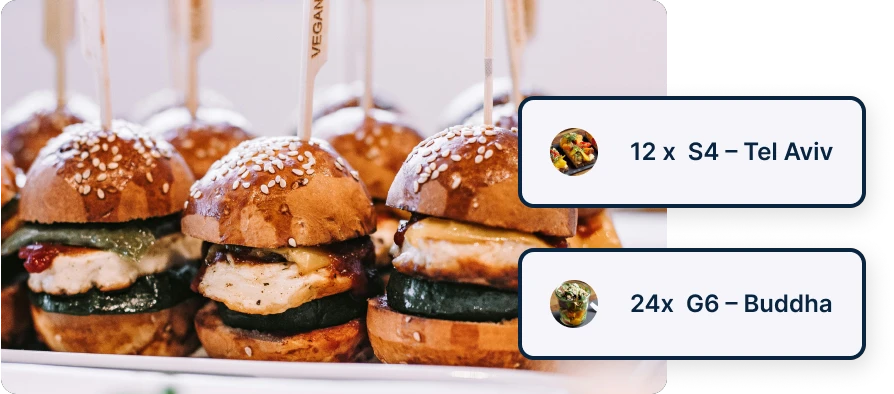
- Variety: vegetarian, vegan and gluten-free options as fixed components
- Technology: digital ordering and delivery platforms, coffee to go and convenience food
Providers such as egora respond to these developments with bespoke business and office catering concepts, DGE-certified nursery catering and event catering, combining quality, sustainability and flexibility.